










 SIGN UP FOR FREE NEWSLETTER
Higher-than-expected inflation figures have complicated Australia’s economic outlook, casting doubt on recent forecasts that interest rates could be cut as early as June next year.
With other data showing the labour market weakening, the figures have led at least one commentator to warn the country could face 1970s-style “stagflation” — a combination of weak economic growth, rising unemployment and rising inflation.
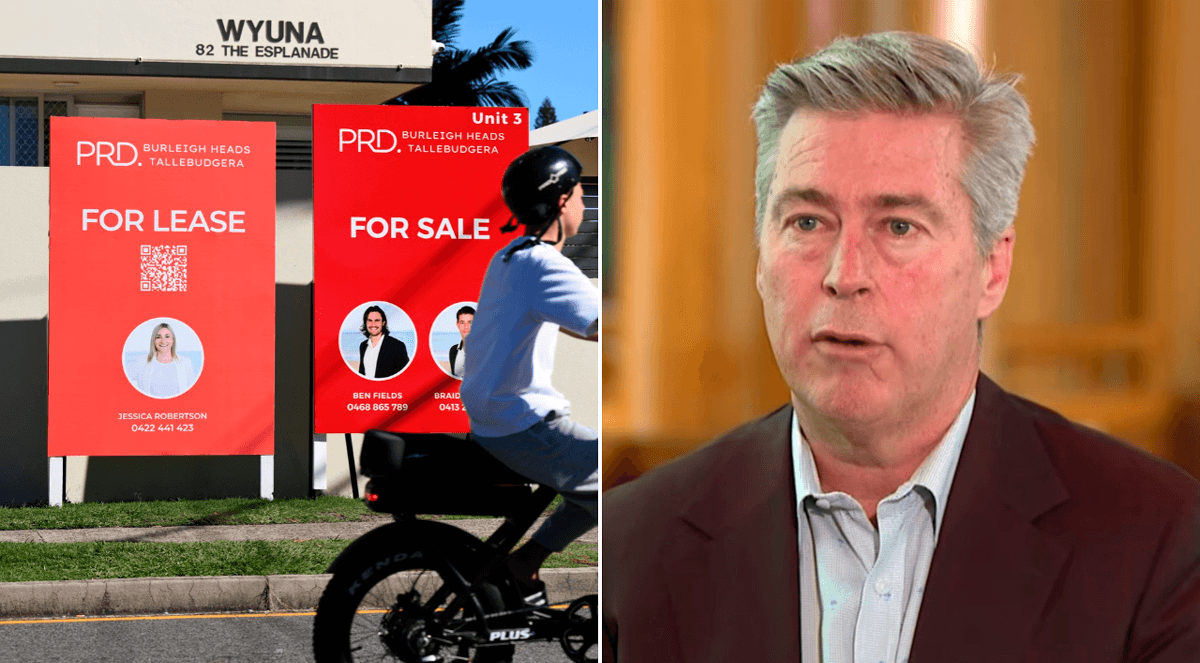
However, one of Australia’s largest banks says the latest inflation data have done nothing to change its view that the Reserve Bank of Australia is unlikely to raise official interest rates above their current 18-year high of 4.85%.
The details
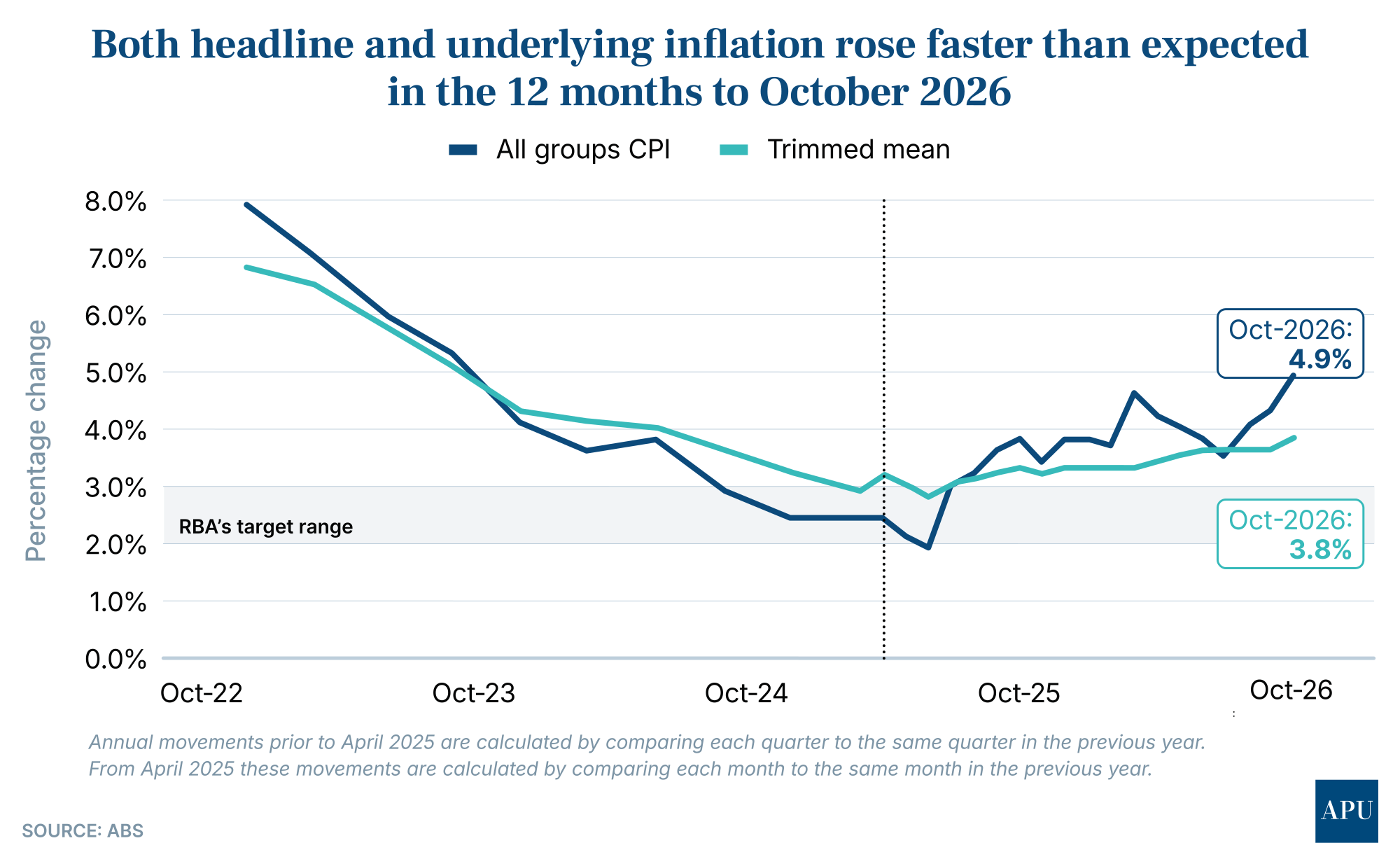
Australia’s main inflation gauge, the Consumer Price Index (CPI), rose 4.9% in the 12 months to October 2026, up from 4.3% in the year to September, according to the latest data from the Australian Bureau of Statistics.
The outcome exceeded market expectations of annual inflation of between 4.7% and 4.8%.
Rachael McCririck, the ABS’s head of price statistics, says the Bureau’s housing category was the largest contributor to annual inflation in October.
“The 6.4% rise in annual inflation for Housing reflected increases for both Electricity and New dwellings expenditure classes,” she says.
Electricity prices rose 25.2% in the 12 months to October, up from an annual rise of 12.8% in September. The ABS says the jump reflects the expiry of significant Commonwealth government rebates that reduced household electricity costs last year.
The ABS says new dwelling prices rose 5.1% in the year to October, up from an annual rise of 4.7% in September, driven by builders passing on higher costs for materials and labour.
Fuel prices
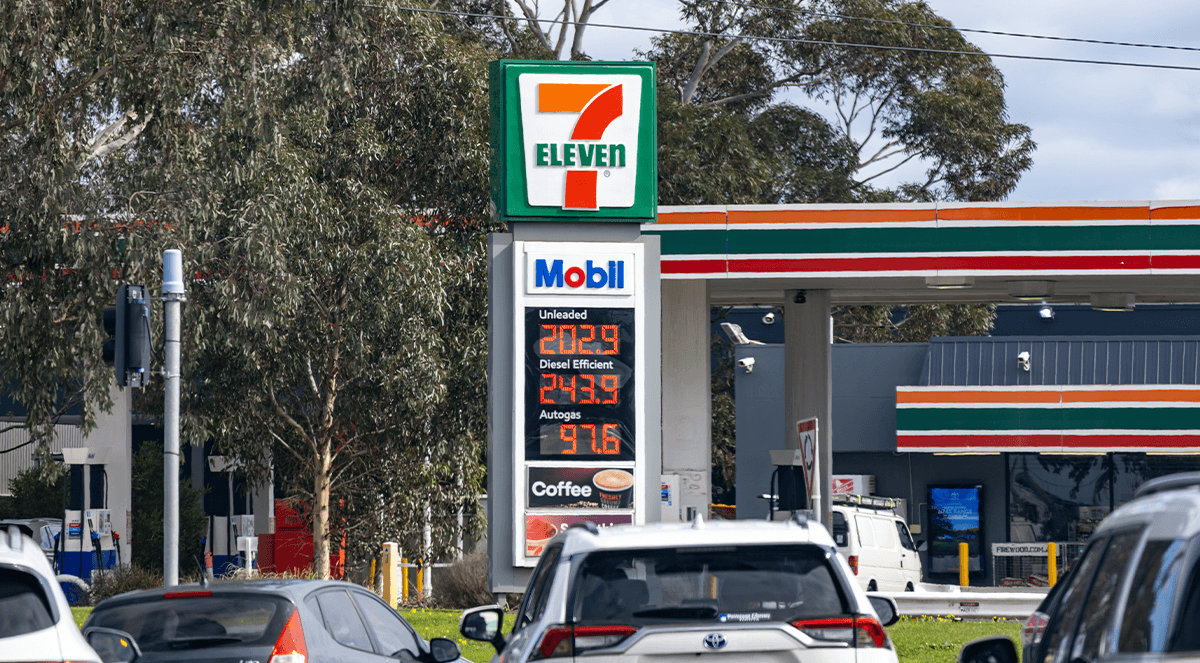
Transport was the second-largest contributor to annual inflation in October, rising by 10.6% due to higher petrol and diesel prices.
“On a monthly basis, Automotive fuel prices rose 6.3% in October, compared to a rise of 9.4% in September. This was driven by higher world oil prices,” Ms McCririck says.
Significantly, the Reserve Bank of Australia’s closely watched measure of underlying inflation, the trimmed mean, also rose more than expected in October to 3.8%, up from 3.6% in the 12 months to September.
Both headline and underlying inflation are now moving further away from the RBA’s target range of 2% to 3%.
“You can see the primary driver of this unwelcome uptick in inflation was the flow-through from global oil prices to petrol bowsers here in Australia,” Treasurer Jim Chalmers told journalists in Canberra.
“This is an unwelcome reminder, an unsurprising reminder of the very substantial pressures that Australians are under.”

Interest rates
The higher-than-expected inflation data were released just a day after one of Australia’s big four banks — ANZ — brought forward its forecast for the first interest rate cut to June 2027, with further cuts pencilled in for August and February 2028.
ANZ’s bold call followed weak employment data, which showed unemployment rising to 4.9% in October 2026.
Several commentators have now questioned that interest rate prediction, suggesting that the RBA may in fact raise rates again in order to try to bring inflation down.
MacroBusiness co-founder and MB Super chief economist Leith Van Onselen says the current economic outlook is a “central banker’s nightmare, as well as a nightmare for indebted Australians, who face a rising repayment burden and a precarious jobs market.”
He’s even raised the prospect of Australia entering a period of 1970s-style “stagflation”.
“With unemployment also tracking well above the RBA’s forecast, Australia is facing a stagflationary environment of falling per capita growth, rising unemployment and rising inflation.”
But Mr Van Onselen’s gloom isn’t shared by the economics team at Westpac.
While acknowledging some “upside surprises” in the October inflation data, Westpac’s chief economist Luci Ellis says the bank is “still forecasting a negative print for headline CPI in November because of the large fall in fuel prices.”
“Trimmed mean is expected to moderate next month as well.”
Ms Ellis, a former RBA deputy governor, says that as a result, “we see nothing to change our view that the RBA is likely finished hiking rates but will still be considering another move in coming months.”
“Nor do we see anything to change our view that the most likely date for the first interest rate cut is August next year.”
The Reserve Bank of Australia’s next Monetary Policy Board meeting is scheduled for 7 and 8 December, with a cash rate decision to be announced on the 8th at 2:30pm AEDT.