










 SIGN UP FOR FREE NEWSLETTER
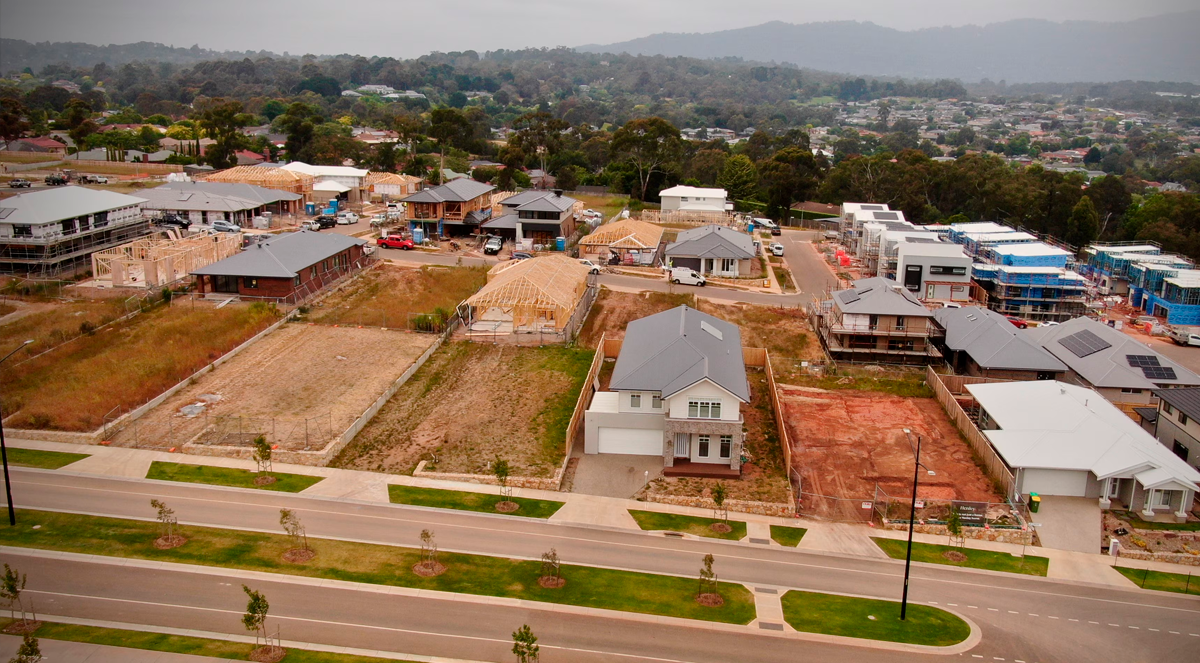
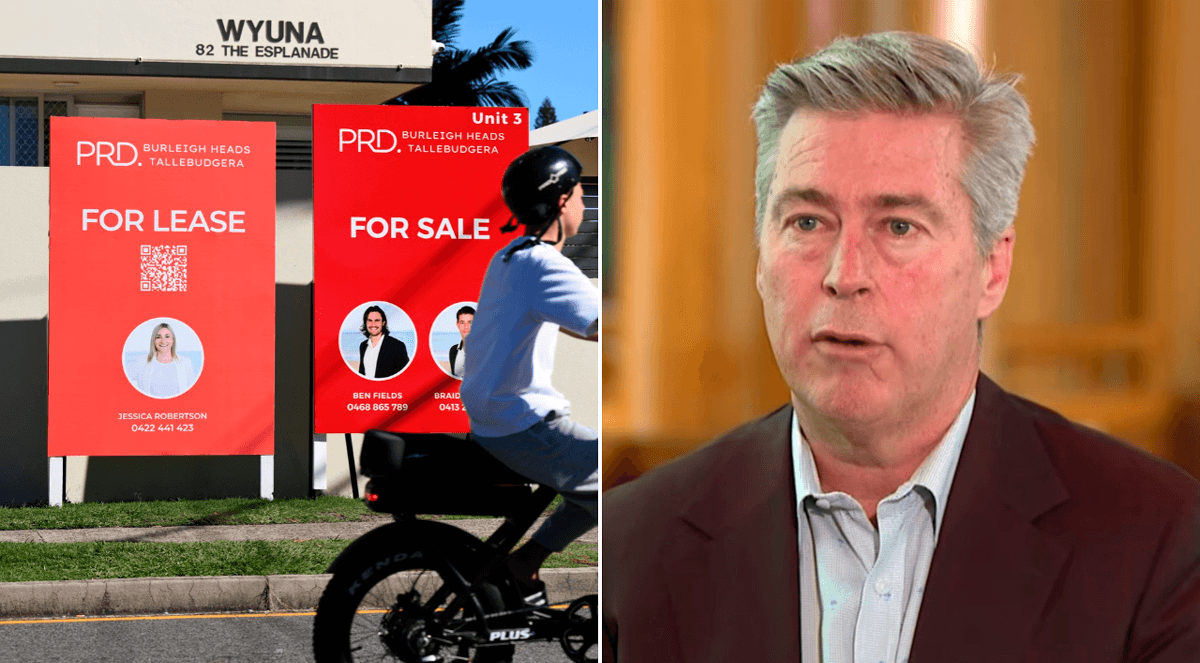
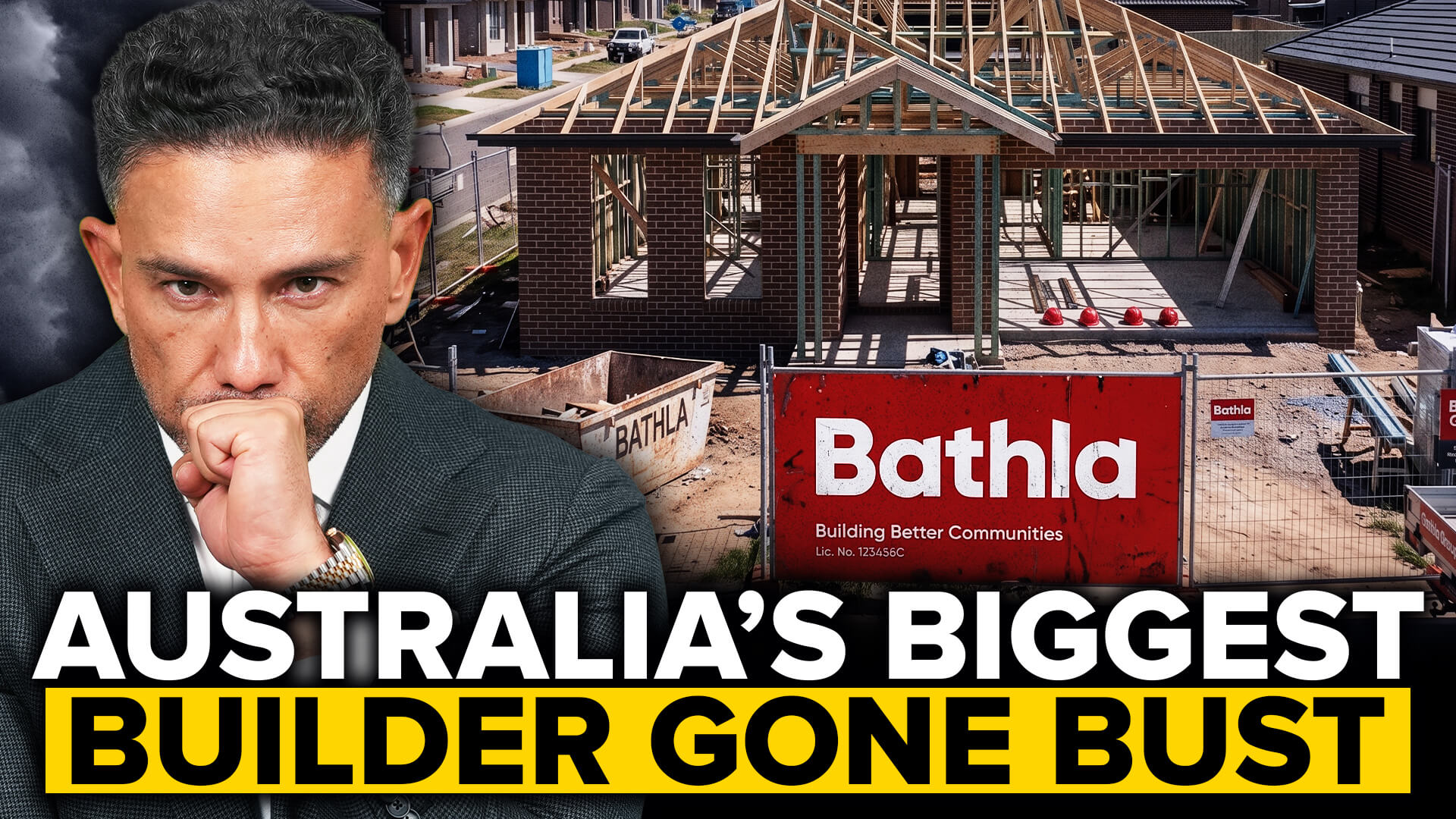
Australia’s housing shortage has a new problem: thousands of apartments are being approved, but many are failing to make it from the drawing board to construction.
New analysis from property consultants Charter Keck Cramer shows apartment construction is running at only around half the rate of approvals nationally, with the gap even wider in Melbourne and Brisbane.
Developers say the problem is no longer simply getting planning permission.
It’s finding enough buyers, securing enough pre-sales and convincing banks that projects stack up financially.
The details
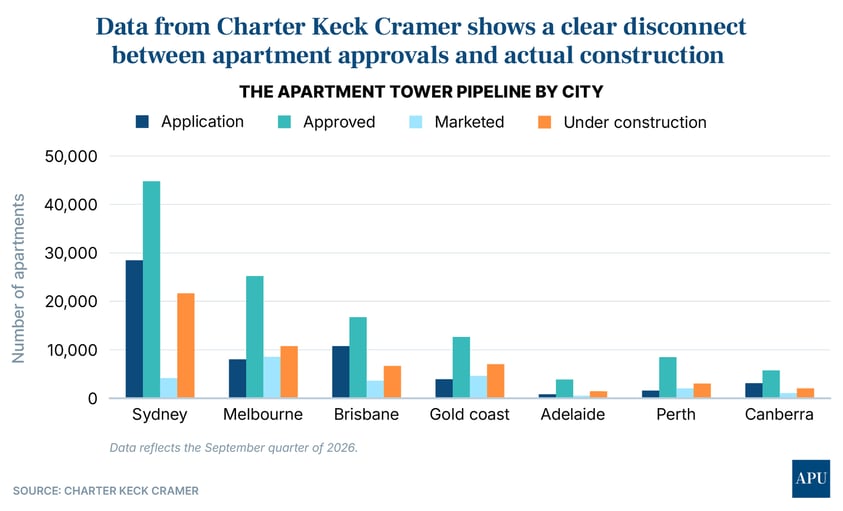
Charter Keck Cramer’s data reveals a widening gap between Australia’s theoretical housing pipeline and what’s actually being delivered.
In Sydney, 44,863 apartments had been approved in the September quarter, but only 4,188 were being marketed and 21,812 were under construction.
In Melbourne and Brisbane, construction was occurring at roughly one-third the rate of approvals.
Charter Keck Cramer executive director of research Richard Temlett says developers are “terrified” of launching projects because they do not believe they can achieve the prices required to make them viable.
“There’s an enormous amount of stock that’s approved, and if that could actually then proceed, we’d be much closer to getting to those housing targets,” he told The Australian.
“But the bottleneck is really in projects that are getting the pre-sales.”
Apartment developers generally need a substantial proportion of a project sold before lenders will provide construction finance.
No buyers means no pre-sales. No pre-sales can mean no bank funding. And no funding means an approved tower can sit on paper indefinitely.
Approvals
The Australian Bureau of Statistics says 17,948 dwellings were approved nationally in September, up 5.1% over the month.
Approvals for private-sector dwellings other than houses — mainly apartments and townhouses — jumped 16.6% to 6,579.
But those higher-density approvals were still 20.5% lower than a year earlier, while Charter Keck Cramer’s pipeline data show that approval itself is no guarantee a project will proceed.
Intrapac Property chief executive Maxwell Shifman says Australia’s housing crisis has become as much a feasibility problem as a planning problem.
“You can’t solve a supply crisis by making new housing less feasible to build,” he says.
The latest HIA figures add to those concerns.
New-home sales fell 17.4% over the three months to October compared with the previous three months and were 27.3% lower than a year earlier, according to HIA chief economist Tim Reardon.
He says the slump occurred before November’s latest RBA interest-rate rise, meaning the full impact of higher borrowing costs may still be working through the market.
Projects redesigned
The pressure is now becoming visible in actual apartment designs.
Brisbane architect Nick Symonds told The Australian developers were regularly asking his firm to rework approved projects.
One project had several floors removed to reduce its overall size and risk, while two Gold Coast developments had reduced individual apartment sizes to fit more dwellings onto each floor.
“Everyone is having a re-look,” he says.

Where have buyers gone?
Industry figures argue the Federal Government’s May property tax changes and restrictions on self managed super fund borrowing have compounded the impact of higher interest rates.
The Government’s changes were intended to reduce investor competition for established homes and redirect more capital towards new housing.
But developers say the immediate problem is that some traditional off-the-plan buyers have disappeared before replacement buyers have emerged.
Charter Keck Cramer’s Richard Temlett says the combination of tax changes, SMSF restrictions and multiple RBA rate increases will mean “significantly” fewer homes being built.
Builders under pressure
Investment adviser Roger Montgomery goes further.
He argues the downturn in buyer demand and pre-sales could trigger significant attrition across the construction sector.
“When buyers hibernate, and banks won't lend without pre-sales, cash flow dries up fast,” he says.
“Builders are retreating, laying off staff, and freezing projects.”
Mr Montgomery says industry insiders are warning Australia could lose “30% to 35% of our builders”, with flow-on effects for tradespeople, suppliers, certifiers and brokers.
While that’s not an official forecast, it is a stark industry warning.
“Construction is our third biggest employer,” Mr Montgomery says.
“Unemployment will rise further.”