









.png?width=292&height=292&name=Copy%20Link%20(1).png)

 SIGN UP FOR FREE NEWSLETTER
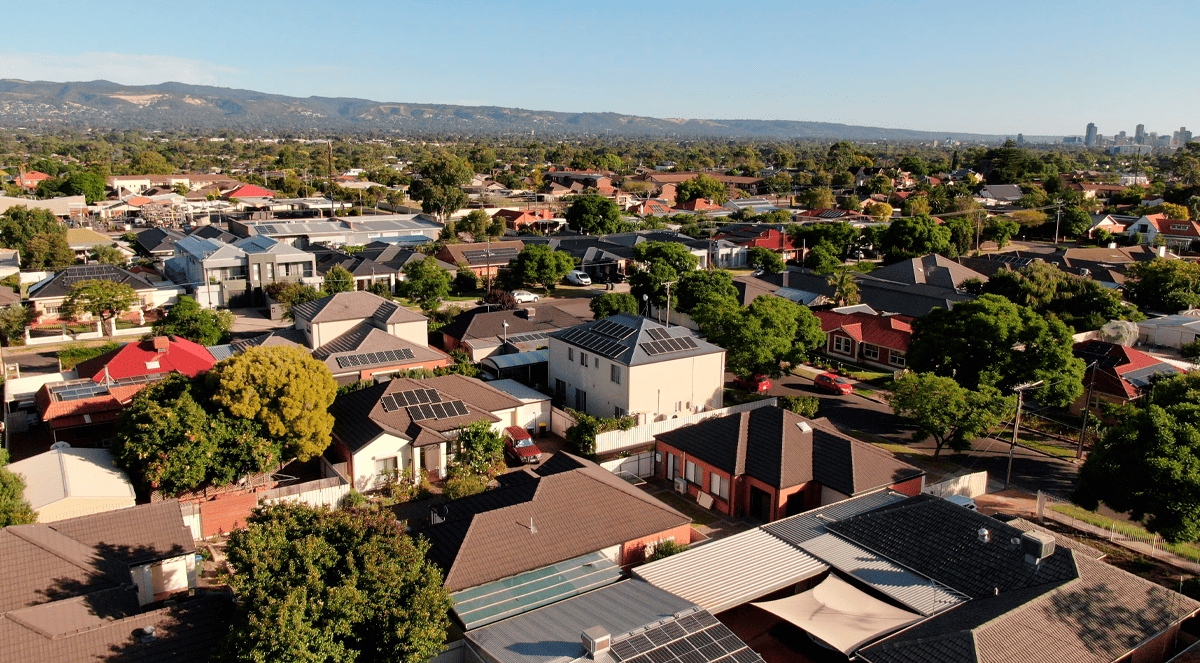
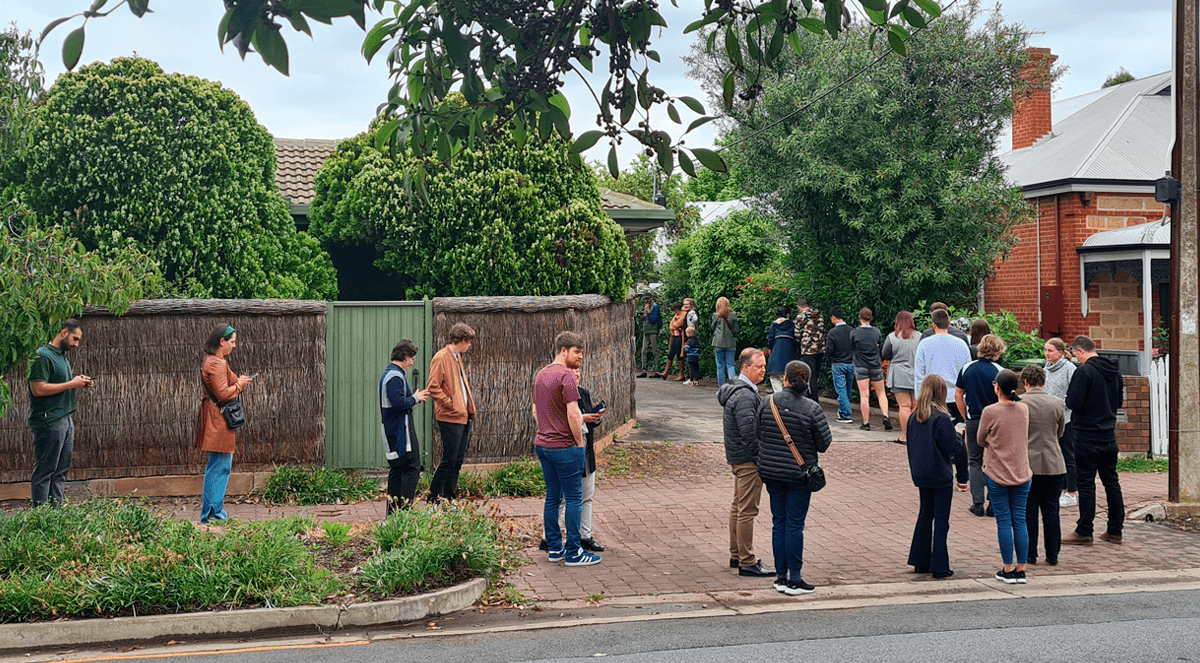
Image from ABC News/Carl Saville
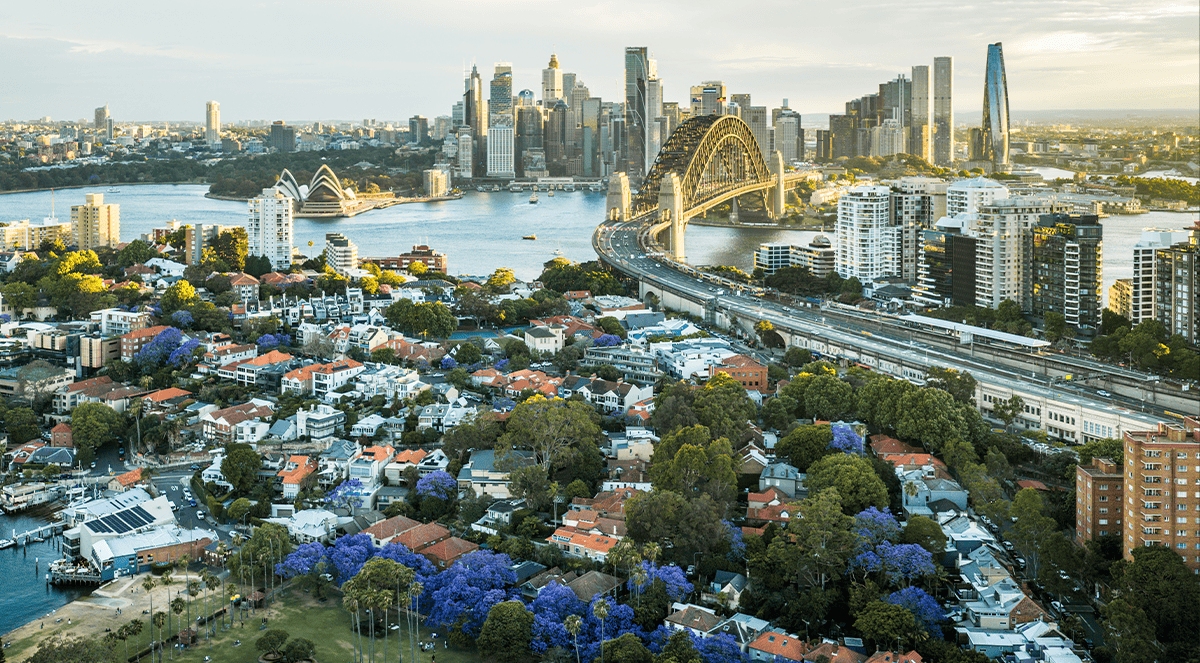
Australia’s housing market is heading into 2026 with confidence still largely intact.
However, growing affordability pressures and interest rate uncertainty are beginning to fracture sentiment along state lines.
New research from property analytics firm Cotality shows property industry confidence remains high overall, even as economic risks loom larger and market conditions diverge sharply between different areas of Australia.
A separate study by the Australian Property Institute finds a greater variance in industry confidence between states, with New South Wales and Victoria the laggards.
Cotality’s Decoding 2026 report
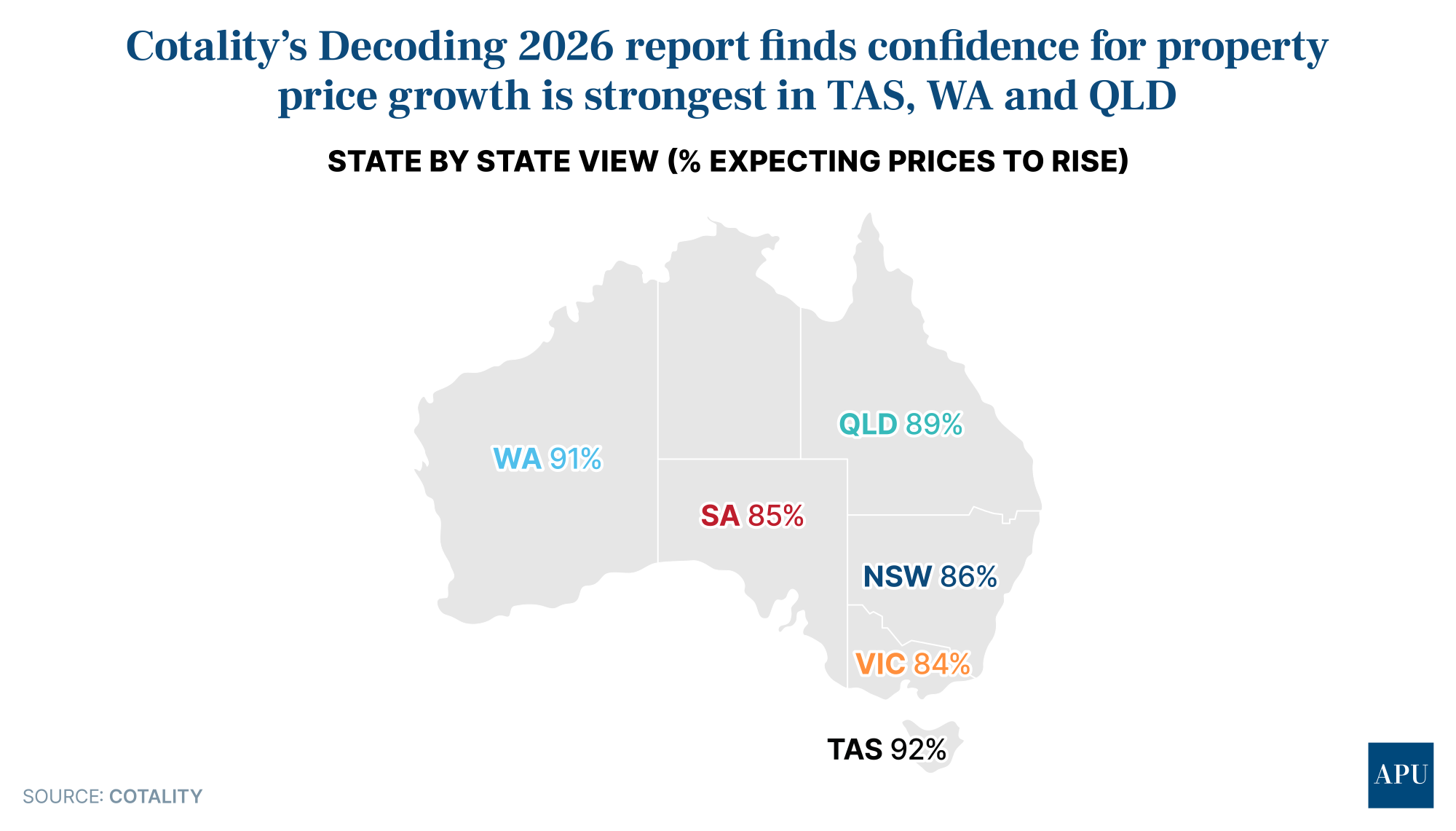
According to Cotality’s new Decoding 2026 report, based on a nationwide survey of real estate agents and financial professionals, 87% of respondents expect dwelling values to rise over the year ahead.
Just 3.5% anticipate prices will fall.
Almost half of those surveyed expect price growth of more than 5%, underscoring the lingering optimism generated by strong home value gains throughout 2025.
Those gains were widespread, with Cotality’s December Home Value Index showing housing values rose across every capital city and regional market last year, with national dwelling values climbing 8.6% - adding about $71,400 to the median home value.
But the pace of growth slowed toward the end of the year as affordability constraints tightened and expectations around interest rates began to shift.
Cotality Australia’s Research Director, Tim Lawless, says the strong sentiment in the survey reflects momentum built earlier in the property cycle, even as conditions become more complex.
“Housing conditions were strong through most of 2025, which explains the broadly positive sentiment,” he says.
“However, national averages distort the variation of performances and market conditions at a local level, and it’s those differences that are becoming more important as affordability and policy settings diverge.”
Tasmania, Queensland, Western Australia and South Australia are emerging as the most confident markets entering 2026, buoyed by several years of solid performance and stronger relative affordability.
In Queensland, 89% of respondents expect prices to rise, with more than half forecasting growth above 5%.
Western Australia recorded similarly upbeat expectations, supported by demand spread across a broad range of price points, helping to sustain steadier growth.
South Australia’s outlook is also notably positive, reflecting limited housing supply and more accessible entry prices compared with larger states.
“Strong internal migration, tighter rental markets and a persistent shortage of housing have combined to support all three of these markets,” Mr Lawless says.
“Those fundamentals remain largely intact, but it’s not surprising to see Queensland and Western Australia agents optimistic about price growth in 2026, given their respective fundamentals and economic prospects.”
In contrast, Mr Lawless says confidence in New South Wales is becoming more conditional.
While expectations for growth remain positive at 86%, high dwelling values and stretched borrowing capacity are making the market increasingly sensitive to interest rate movements.
Victoria continues to lag after posting the weakest state performance in 2025.
Although 84% of respondents still expect prices to rise, sentiment is weighed down by higher property taxes, reduced investor participation and softer population growth.
“Victoria stands out for the scale of investor selling, policy settings and higher holding costs, all of which have weighed on activity, even as first-home buyers now account for a larger share of lending,” Cotality’s Tim Lawless says.
Policy changes aimed at supporting first-home buyers are also reshaping market dynamics.
More than 75% of real estate agents surveyed reported increased buyer activity following the expansion of the Federal Government’s First Home Guarantee scheme, with competition intensifying around price thresholds tied to the scheme.
Treasury data shows more than 21,000 first-home buyers have accessed the expanded 5% deposit scheme since October.
However, affordability remains a growing constraint, with fewer than half of Australian suburbs now falling below First Home Guarantee price caps - a sharp decline from a year earlier.
Despite the broadly positive outlook, industry confidence varies across different parts of the country, based on affordability, interest rate uncertainty and uneven regional conditions.
The Reserve Bank of Australia holds its first meeting for 2026 next week, and financial markets now think it is more likely than not that the central bank will raise interest rates by 0.25% in order to curb a new inflation breakout.
Any increase in official interest rates would likely impact buyer sentiment.
Nevertheless, Tim Lawless says the property market enters 2026 from a position of strength.
“There is a cloud of uncertainty around inflation and interest rate settings as well as affordability challenges, all of which are likely to weigh on housing confidence,” Mr Lawless says.
“However, given we aren’t likely to see a material supply response in 2026 either, this should help to offset any downside risk to home values trending substantially lower.”
API’s Market Outlook for Q1 2026
The Australian Property Institute represents many property valuers, property advisors, analysts and consultants.
Its inaugural Market Outlook publication seeks to measure industry confidence, although this is measured across the residential, commercial and agricultural property sectors.
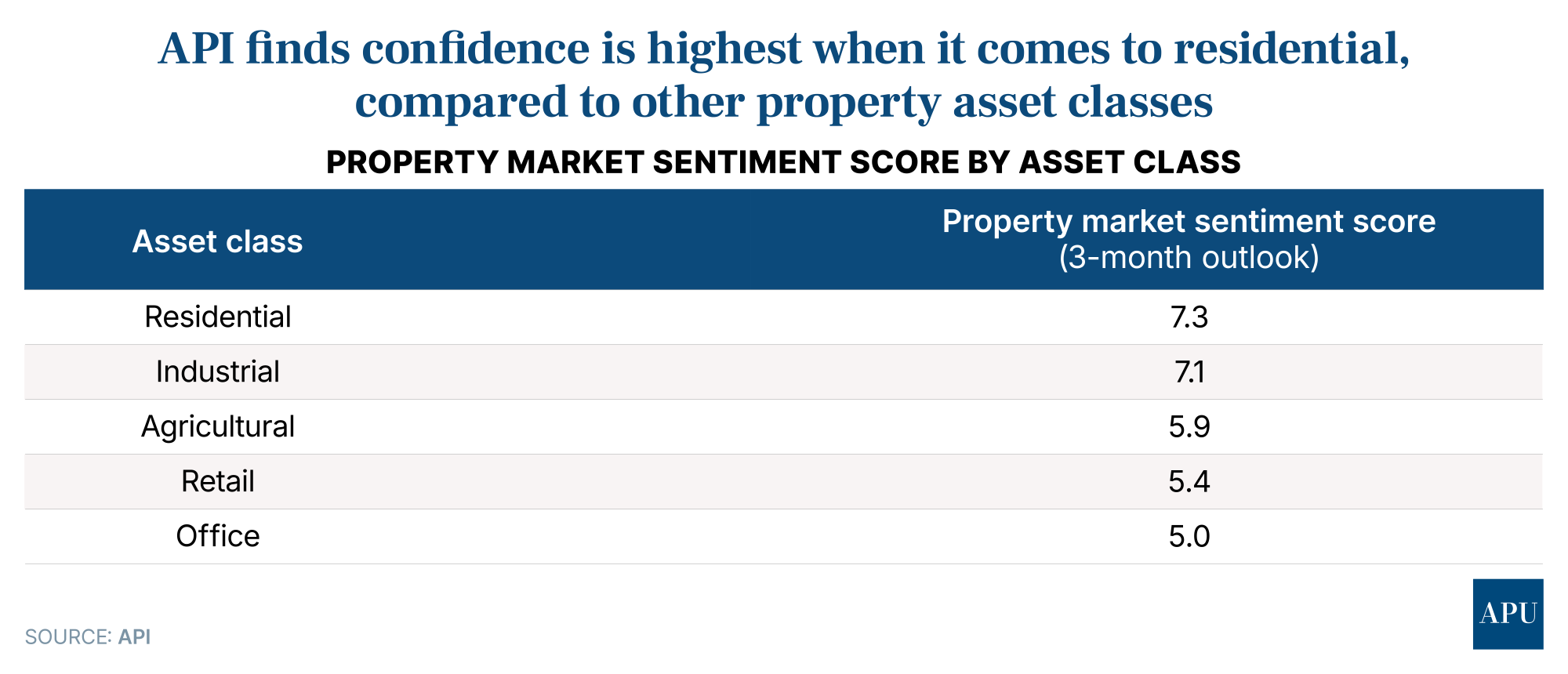
Nevertheless, confidence was highest when it came to considering the prospects for residential property, with a score of 7.3 out of 10.
Confidence was lowest when the professionals surveyed considered the prospects for office investments, with a score of just 5 out of 10.
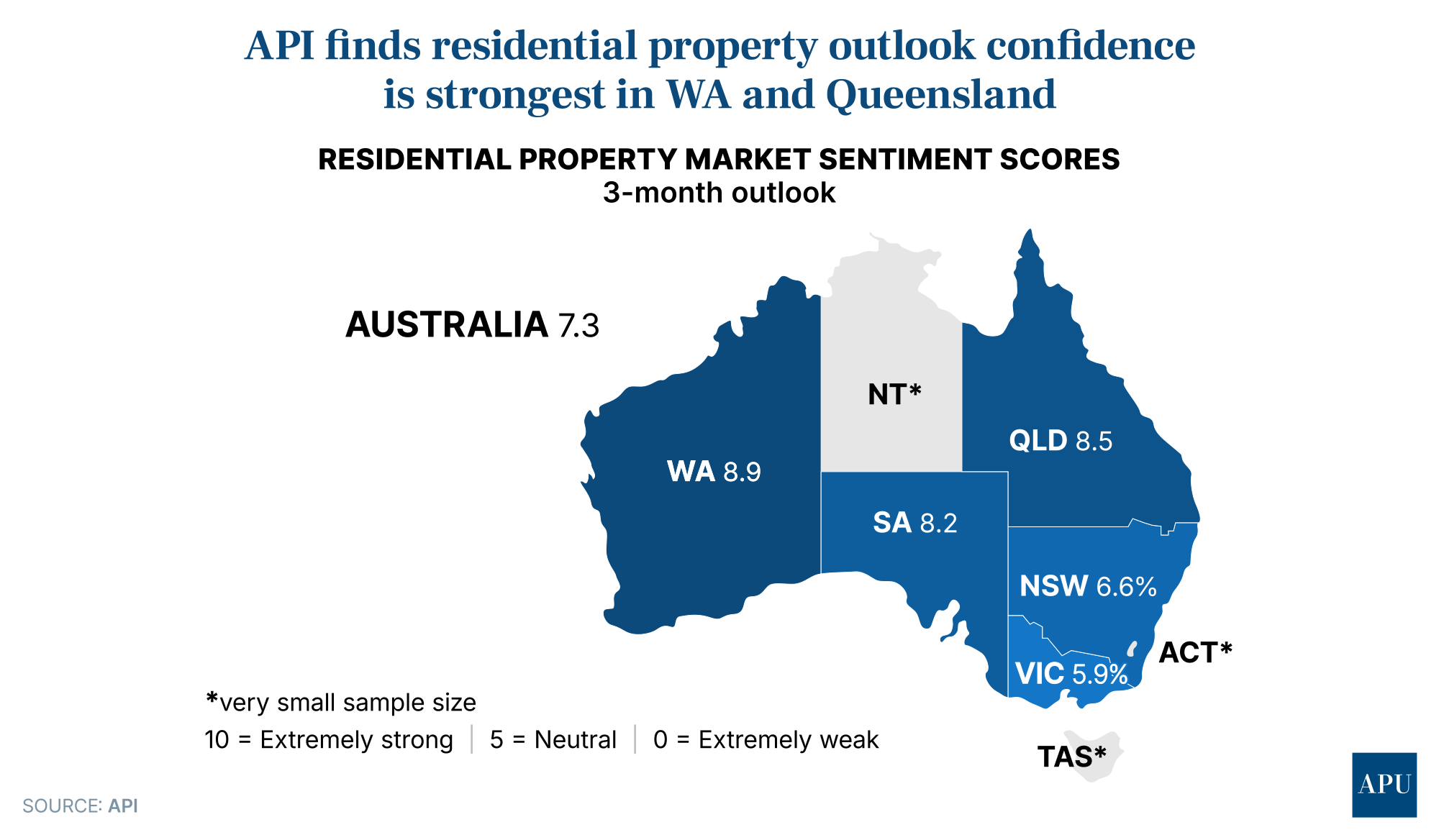
Respondents to API’s Market Outlook survey were most confident about residential prospects in Western Australia (8.9 out of 10) and Queensland (8.5 out of 10).
At the other end of the confidence scale were Victoria (5.9) and New South Wales (6.6), with API saying it had insufficient responses to its survey to make any categorical judgements about the prospects for the smaller markets of the ACT, NT and Tasmania.
“The top five drivers of residential property prices in the next three months, as predicted by residential valuers, are construction costs, the interest rate outlook, population growth, a lack of existing housing supply and a lack of new housing supply,” says API’s Chief Economist and Market Outlook author, Sherman Chan.
“Among all potential drivers of residential property prices, 'job market conditions' has the biggest increase in selection by residential valuers when comparing their market assessment of the next three months and the last three months,” Dr Chan says.
With the Australian labour market showing remarkable resilience - unemployment fell to 4.1% in December 2025 despite expectations it would trend higher - confidence in the residential property market looks set to remain strong, at least in the short term.







.jpg?width=1920&height=1080&name=WTF%20Is%20Happening%20To%20The%20Housing%20Market!%20$500%20Billion%20Wiped%20Out%20As%20Prices%20Fall%20Faster%20Every%20Month%20Scott%20Kuru%20YPU%20027%20(1).jpg)
%20Scott%20Kuru%20YPU%20025.jpg?width=1920&height=1080&name=This%20Is%20Worse%20Than%20A%20Recession%20RBA%20Admits%20Australias%20Wage%20Collapse%20Cant%20Be%20Stopped%20(Prepare%20Now)%20Scott%20Kuru%20YPU%20025.jpg)


























.jpg?width=1920&height=1080&name=EXPOSED%20How%20The%20Govt%20Let%20These%20Oil%20Giants%20Get%20Away%20With%20Paying%20Zero%20Tax%20For%20Aussie%20Gas%20Scott%20Kuru%20DPU%20256%20(1).jpg)







%20Scott%20Kuru%20DPU%20248.jpg?width=1920&height=1080&name=Major%20Banks%20CAUGHT%20Preparing%20For%20Australia%E2%80%99s%20Biggest%20Housing%20Crash%20(Defaults%20%26%20Bankruptcies%20Coming)%20Scott%20Kuru%20DPU%20248.jpg)
%20Scott%20Kuru%20DPU%20247.jpg?width=1920&height=1080&name=This%20Is%20How%20Australia%20Gets%20Pushed%20Into%20the%20Next%20Big%20Reset%20(Trust%20Collapse%20Has%20Officially%20Begun)%20Scott%20Kuru%20DPU%20247.jpg)







%20Scott%20Kuru%20DPU%20239.jpg?width=1920&height=1080&name=URGENT%20Life%20In%20Australia%20Has%20Become%20Impossible%20For%20Millions%20Of%20Aussies%20(It%E2%80%99s%20About%20To%20Get%20Worse)%20Scott%20Kuru%20DPU%20239.jpg)










%20Scott%20Kuru%20DPU%20227.jpg?width=1920&height=1080&name=URGENT%20ALERT%20Australia%E2%80%99s%20Property%20Market%20Is%20Sliding%20Into%20Something%20Much%20Bigger%20(Prepare%20Now)%20Scott%20Kuru%20DPU%20227.jpg)