









.png?width=292&height=292&name=Copy%20Link%20(1).png)

 SIGN UP FOR FREE NEWSLETTER
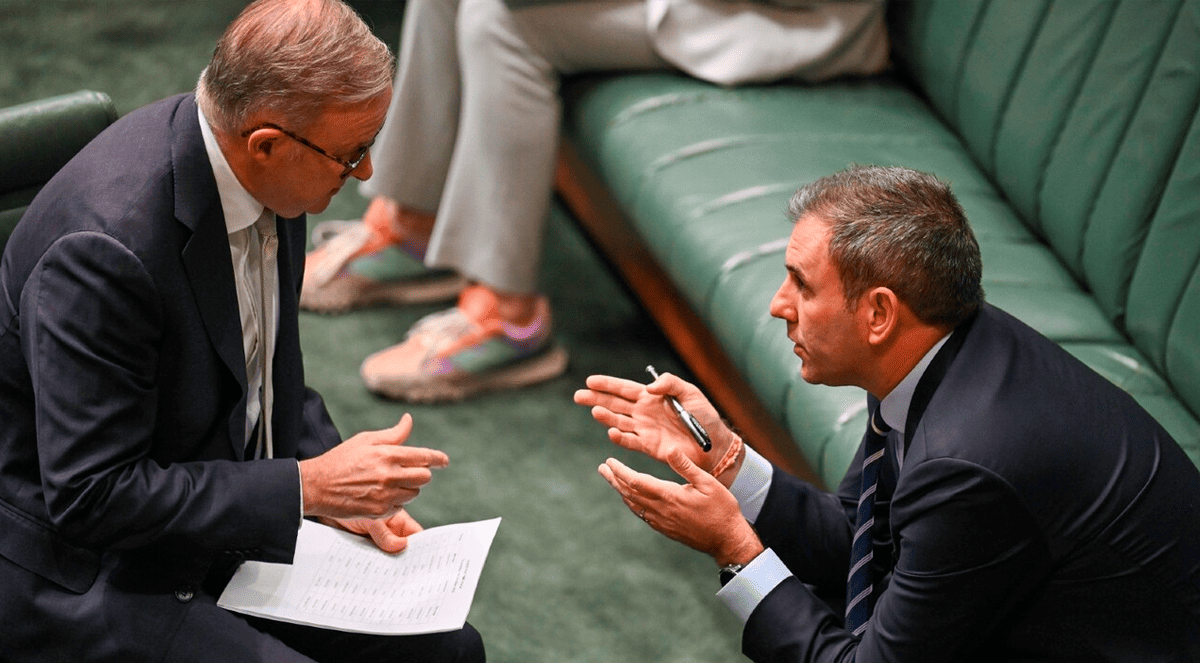
Image from Sky News Australia
Speculation that the Albanese government could wind back the Capital Gains Tax (CGT) discount has ignited a fierce debate over who really underpins Australia’s rental market, and who would bear the cost of reform.
At the centre of the argument is a simple but critical question: if investor incentives are reduced, will renters suffer?
Two prominent economists have reached sharply different conclusions.
The Ray White view
In an opinion piece called “You can’t have rental properties without investors”, Nerida Conisbee, the Chief Economist at national real estate chain Ray White, argues the link between investors and rental supply is direct and unavoidable.
“Rental housing in Australia exists because investors buy it,” she writes.
“Almost every rental property in the country is owned by an investor.”
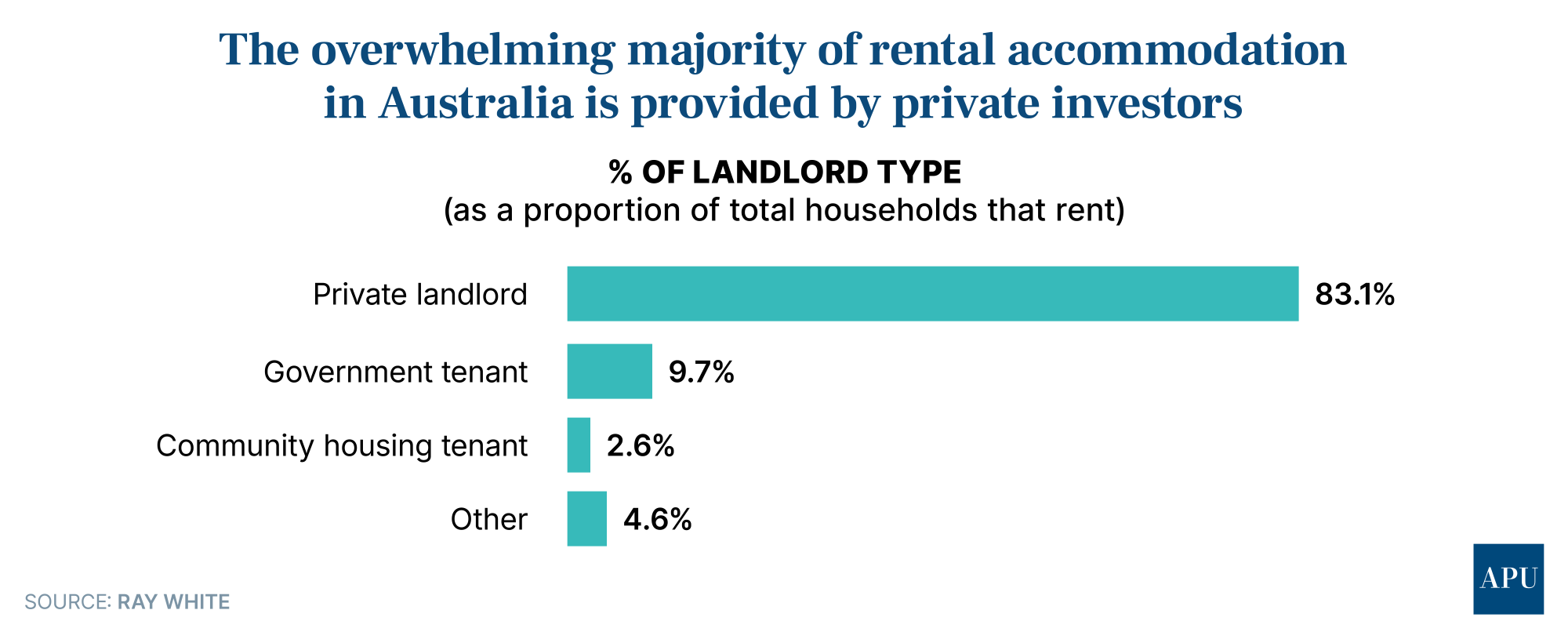
With vacancy rates tight and rents having surged in recent years, Ms Conisbee warns that reducing the CGT discount - currently set at 50% for assets held longer than a year - risks discouraging the very cohort that provides most rental housing.
“If investor participation falls, rental supply tightens.
“When rental supply tightens, rents rise.
“The mechanism is straightforward.”
She notes that Australia’s rental system is overwhelmingly driven by small “mum and dad” investors, not institutions or governments.
Build-to-rent (BTR) developments, while growing, would account for only a fraction of total stock for years to come.
Victoria, Ms Conisbee argues, provides a cautionary tale.
After the state government lifted land taxes and introduced new levies, investor participation fell and rental listings declined.
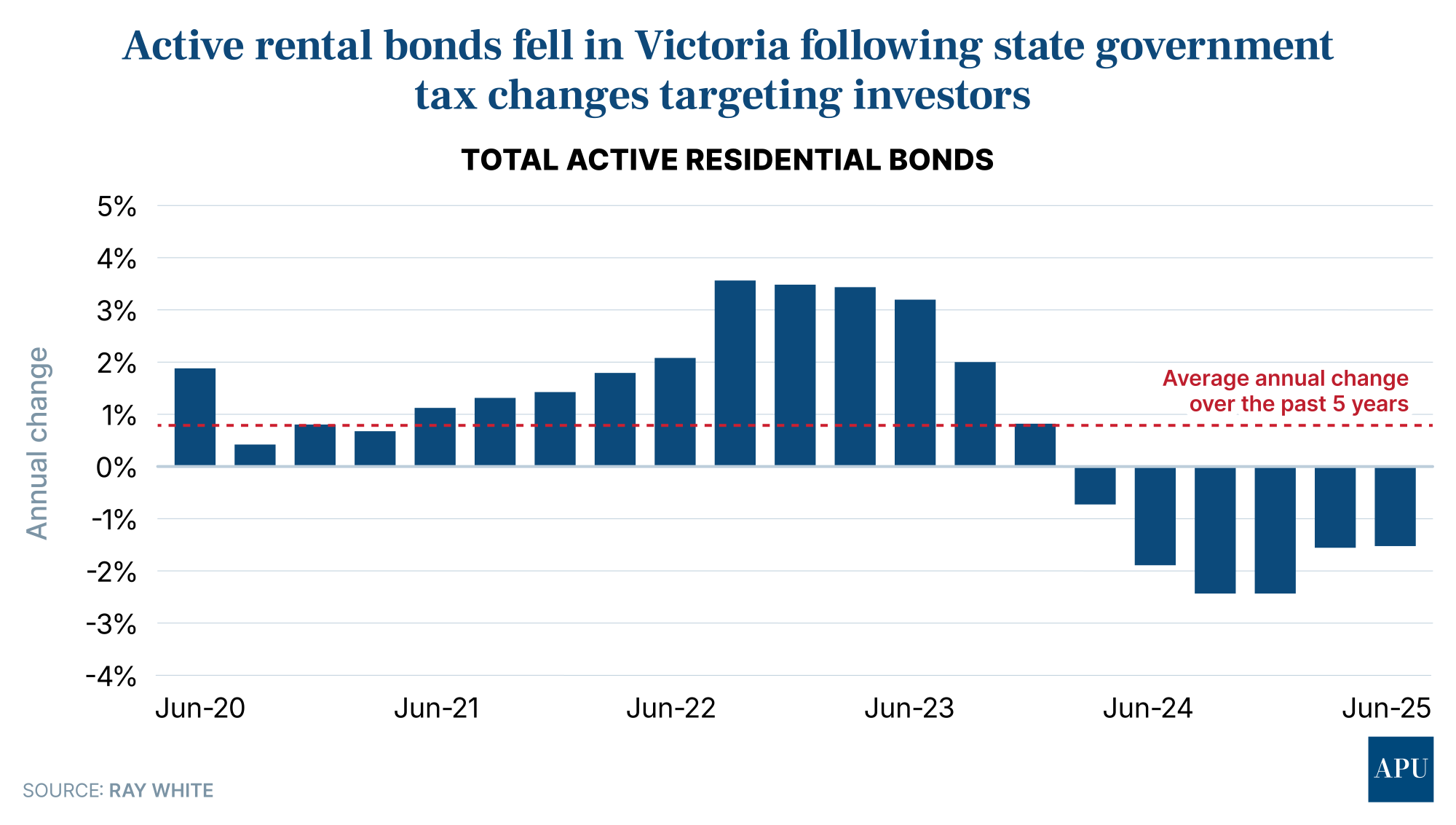
Over the past five years, Melbourne house prices rose around 20%, but rents climbed 34.9%.
“Homeowners have experienced slower capital gains while renters have experienced faster rental increases,” Nerida Conisbee says.
“If housing policy is intended to improve affordability across the system, the distributional outcome in Victoria suggests renters have not been the beneficiaries.”
Her conclusion is blunt:
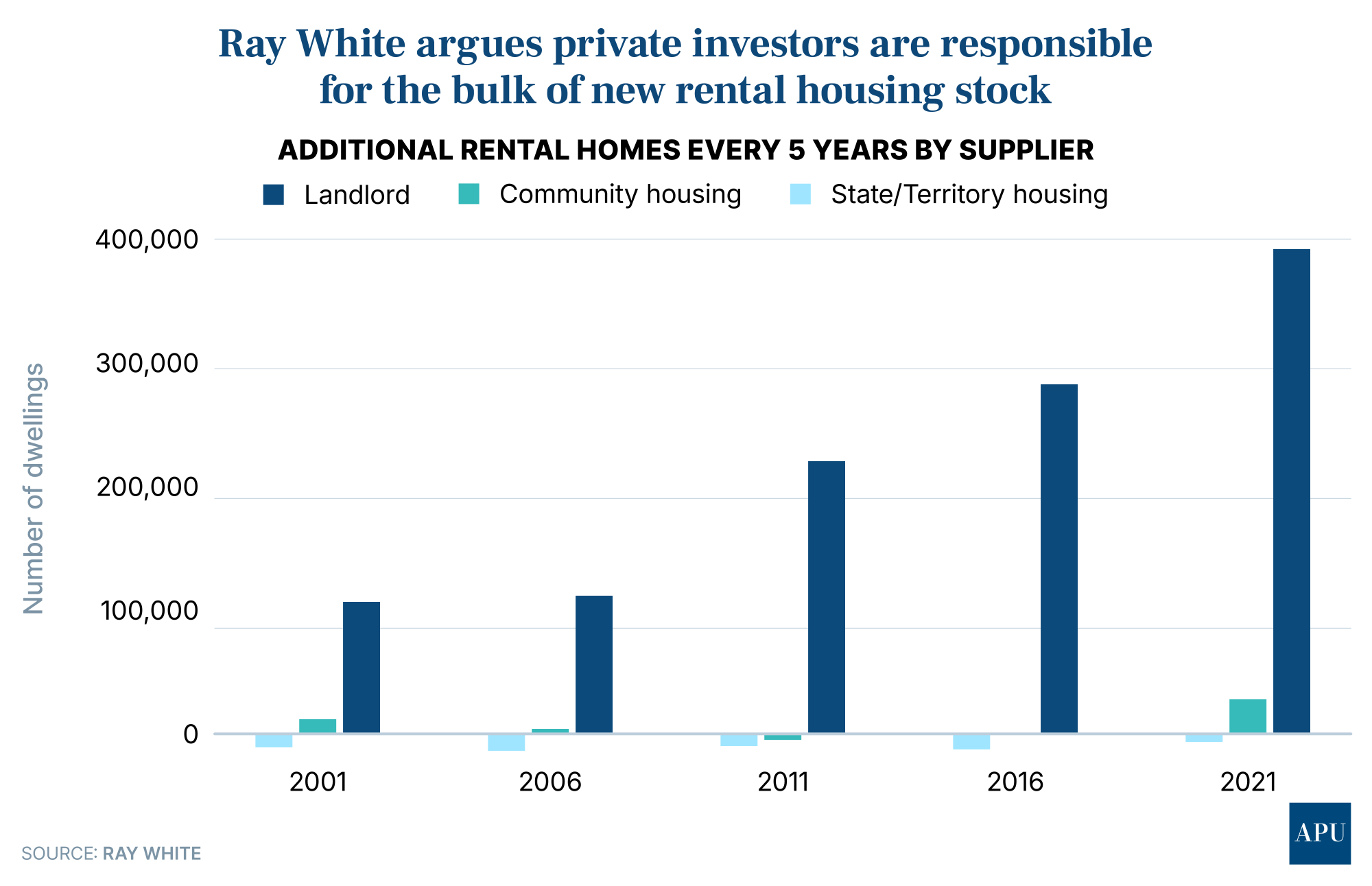
“Encouraging more investment in new housing increases rental supply.
“Discouraging participation reduces it.”
The Macrobusiness view
Leith van Onselen, the Chief Economist at MB Fund and co-founder of Macrobusiness - the contrarian financial markets and economics website, says that logic is flawed.
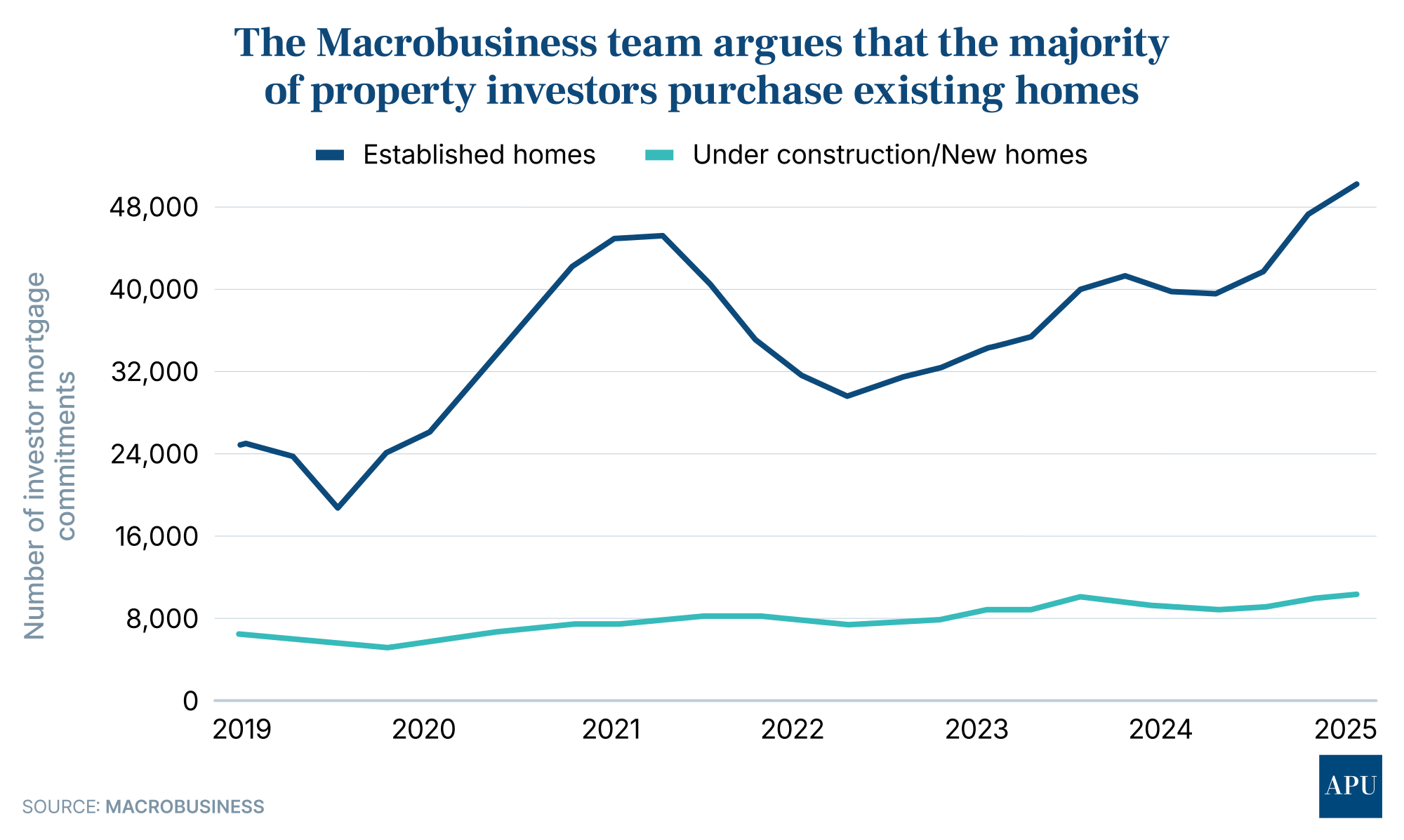
Using housing finance data from the Australian Bureau of Statistics, Mr Van Onselen notes that 82% of investor loans in 2025 were for established dwellings, not new builds.
“Therefore, property investors are pumping up demand far more than they are contributing to new housing supply,” he argues.
In his view, if investors retreat due to tax changes, properties don’t vanish - they change hands instead.
“The property does not disappear,” he argues.
“Instead, the property will either be purchased by another investor or by an owner-occupier (including a first-home buyer).”
That shift, he says, keeps the balance intact: fewer rentals available, but also fewer renters competing for them.
Macrobusiness’ Leith Van Onselen also points to Victoria as evidence against the claim that higher investor taxes inevitably hurt tenants.
Despite an exodus of some investors following tax increases, he says Melbourne’s advertised rents rose 36% over five years to January 2026 - lower than the 43% increase Cotality measured across Australia’s combined capital cities.
Rental affordability in Melbourne, he notes, is better than the national average.
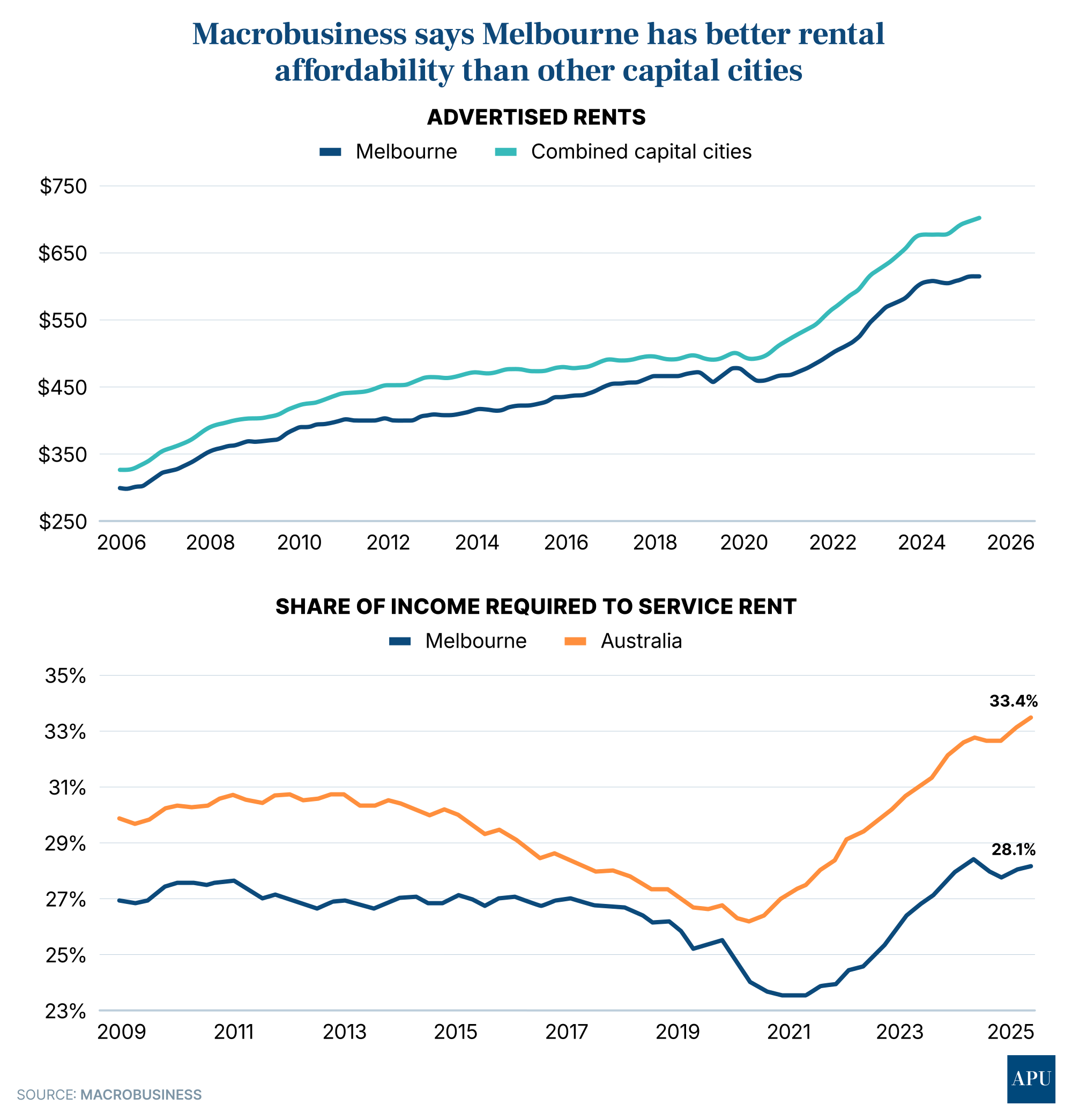
“Melbourne demonstrates why changes to the CGT discount are unlikely to harm the nation’s rental markets,” he says.
Instead, Mr Van Onselen argues that migration policy, not tax concessions, is the dominant driver of rental pressures.
“The reality is that the rental crisis in Australia will remain as long as the federal government keeps importing demand faster than new housing can be supplied.”


A fundamental divide
The disagreement reflects two competing views of how Australia’s housing market functions.
Ray White’s Nerida Conisbee sees investors as the backbone of rental supply, warning that weakening incentives will tighten the market and push rents higher.
Macrobusiness’ Leith Van Onselen sees investors primarily as competitors with first-home buyers for existing stock, arguing that reducing tax advantages would simply rebalance ownership - and potentially lift homeownership rates - without materially harming tenants.
Both cite Victoria as an example, with both claiming the data support their arguments.
As Canberra weighs whether to cut back or even scrap the CGT discount, the stakes extend well beyond investor returns.
The real test will be whether reform reshapes who owns Australia’s homes, or whether it reshapes the cost of renting them.









.jpg?width=1920&height=1080&name=WTF%20Is%20Happening%20To%20The%20Housing%20Market!%20$500%20Billion%20Wiped%20Out%20As%20Prices%20Fall%20Faster%20Every%20Month%20Scott%20Kuru%20YPU%20027%20(1).jpg)

%20Scott%20Kuru%20YPU%20025.jpg?width=1920&height=1080&name=This%20Is%20Worse%20Than%20A%20Recession%20RBA%20Admits%20Australias%20Wage%20Collapse%20Cant%20Be%20Stopped%20(Prepare%20Now)%20Scott%20Kuru%20YPU%20025.jpg)

























.jpg?width=1920&height=1080&name=EXPOSED%20How%20The%20Govt%20Let%20These%20Oil%20Giants%20Get%20Away%20With%20Paying%20Zero%20Tax%20For%20Aussie%20Gas%20Scott%20Kuru%20DPU%20256%20(1).jpg)







%20Scott%20Kuru%20DPU%20248.jpg?width=1920&height=1080&name=Major%20Banks%20CAUGHT%20Preparing%20For%20Australia%E2%80%99s%20Biggest%20Housing%20Crash%20(Defaults%20%26%20Bankruptcies%20Coming)%20Scott%20Kuru%20DPU%20248.jpg)
%20Scott%20Kuru%20DPU%20247.jpg?width=1920&height=1080&name=This%20Is%20How%20Australia%20Gets%20Pushed%20Into%20the%20Next%20Big%20Reset%20(Trust%20Collapse%20Has%20Officially%20Begun)%20Scott%20Kuru%20DPU%20247.jpg)







%20Scott%20Kuru%20DPU%20239.jpg?width=1920&height=1080&name=URGENT%20Life%20In%20Australia%20Has%20Become%20Impossible%20For%20Millions%20Of%20Aussies%20(It%E2%80%99s%20About%20To%20Get%20Worse)%20Scott%20Kuru%20DPU%20239.jpg)










%20Scott%20Kuru%20DPU%20227.jpg?width=1920&height=1080&name=URGENT%20ALERT%20Australia%E2%80%99s%20Property%20Market%20Is%20Sliding%20Into%20Something%20Much%20Bigger%20(Prepare%20Now)%20Scott%20Kuru%20DPU%20227.jpg)