









.png?width=292&height=292&name=Copy%20Link%20(1).png)

 SIGN UP FOR FREE NEWSLETTER
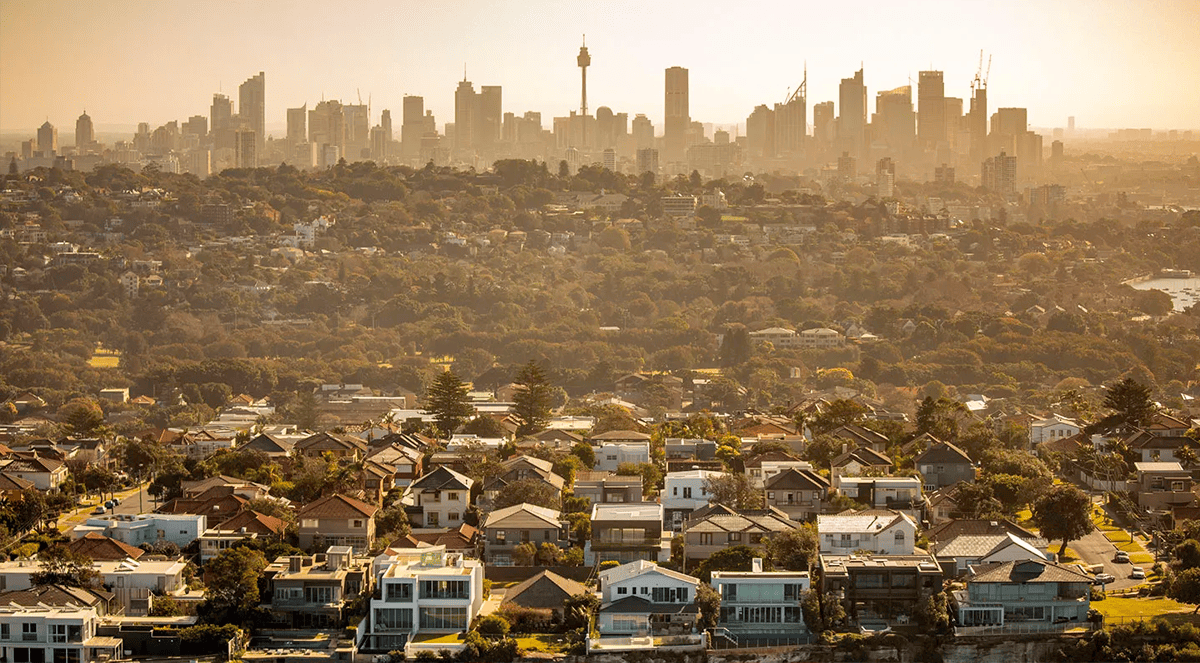
Image by Andrew Merry via Getty Images
State and federal housing policies and affordability challenges will define the Australian property market in 2026, according to a leading property industry group.
The Real Estate Buyers Agents Association of Australia (REBAA) says it expects stable but divergent conditions across the nation’s capital and regional markets this year.

Image from Melinda Jennison - Brisbane Property Specialist Facebook Page
REBAA President Melinda Jennison says housing in 2025 continued to be shaped by a combination of affordability pressures, higher interest rates and constrained borrowing capacity, with performance varying across capital cities and regional areas.
“While some markets have experienced softer conditions as higher rates and rising stock levels took the heat out of price growth, others, particularly those still perceived as relatively affordable, have remained resilient, underpinned by population growth, tight rental markets and limited new housing supply,” she says.
“Across the country, demand for well-located, quality homes and investment-grade assets have remained solid, even as many buyers adjust expectations on budget, location and dwelling type.”
Ms Jennison says lower-value properties and more affordable growth corridors in a number of cities continue to attract strong interest from first home buyers, especially since the introduction of the Federal Government’s First Home Guarantee Scheme.
In contrast, she says some premium property segments have normalised after the rapid gains of previous years.
“Overall, the national picture is one of divergent but generally stable market performance, with local economic conditions, migration trends and policy settings all playing a role,” she says.
NEW SOUTH WALES
Linda Johnson, REBAA’s New South Wales State Representative says the state’s housing performance in 2025 was “surprisingly firm”.
“Across NSW, both houses and units recorded solid gains, with regional markets again edging ahead of Sydney on a percentage basis.”
Ms Johnson says in metropolitan Sydney, the story has been one of “scarcity, not frenzy”.
“Listings remain well below historic averages and vacancies are near record lows, pushing both prices and rents higher,” she says.
“Demand has broadened from inner-city blue-chip suburbs into more affordable middle-ring areas and transport corridors, with attached dwellings and townhouses attracting strong interest as buyers trade land size for a lower price point.
“Investor activity has lifted cautiously on the back of stronger yields, but highly leveraged buyers are still constrained by serviceability buffers.”
Ms Johnson says the Minns Government’s low and mid-rise housing policy, which opens up medium-density housing within 800 metres of 171 transport centres, is starting to have an impact, with developers moving their focus to these precincts.
“However, industry modelling still points to a sizeable state-wide housing shortfall by the end of the decade,” she says.
Linda Johnson says the expansion of the Albanese government’s First Home Guarantee Scheme from 1st October 2025 has drawn more first home buyers into outer-metro Sydney and larger regional centres.

Image by Max Mason-Hubers
“Yet build costs and planning bottlenecks remain real challenges,” she says.
Ms Johnson said that despite policy and reforms, the NSW market is still being driven by interest rates, chronic undersupply, population growth, and rental scarcity.
“The Reserve Bank’s cash rate sits at 3.60% after earlier cuts, with recent upside surprises in inflation reducing the odds of further easing in the near term.”
Yet she expects “2026 is likely to deliver more of the same – tight rental conditions, persistent undersupply and moderate, uneven price growth rather than a boom.”
VICTORIA
REBAA Victorian State Representative Matt Scafidi says Melbourne’s property market has finally “found its groove again”.
After what he says was “a pretty flat 2024”, prices climbed steadily through the second half of 2025, only seeing a slight easing in the final month of the year.
“What’s driving it?” he asks.
“A few things lining up at once.
“Earlier this year, we worked through a lot of extra stock, and now demand is outstripping supply.
“Building approvals are at record lows, migration is booming, and vacancy rates are sitting at historic lows.
“Add in interest rate cuts and suddenly the market feels very different.”
Mr Scafidi also points to Melbourne’s affordability advantage, with house and land packages available from around $700,000 compared to $1.15 million in Sydney.
“Investors are circling again looking for value,” he says.

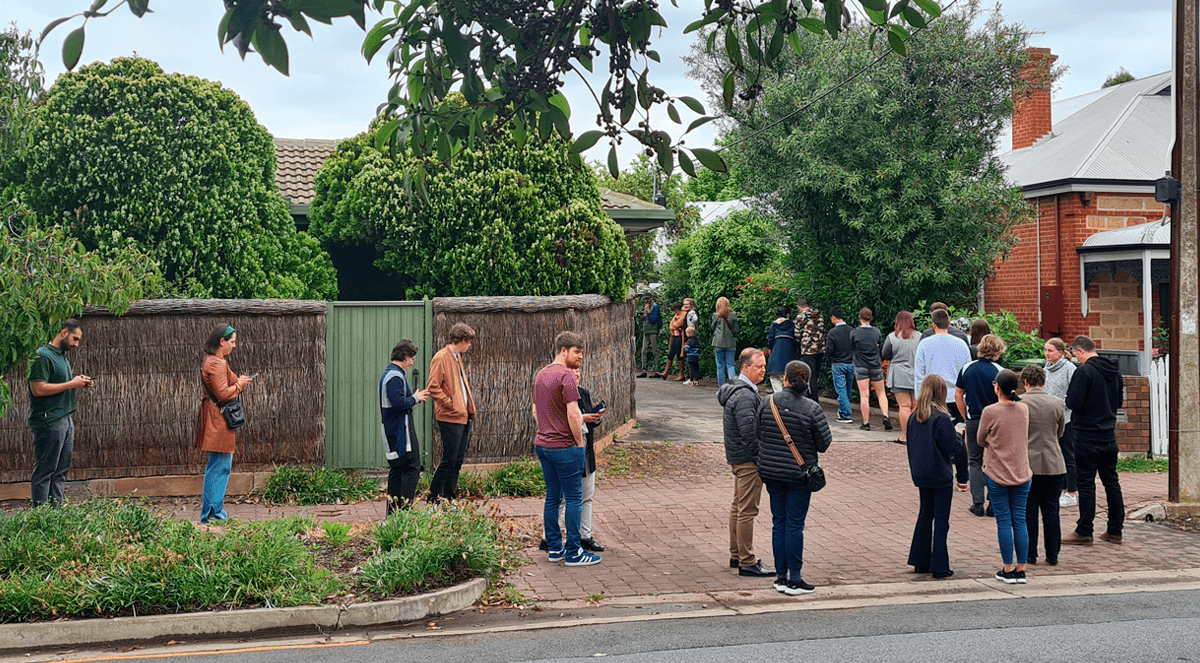
“The suburbs doing best are the inner-and middle-ring pockets where families, professionals, and long-term owner occupiers want to be.
“Houses and townhouses on good land in lifestyle-friendly locations are leading the charge.”
Mr Scafidi says major banks now expect Melbourne to be one of Australia’s strongest performers in 2026.
“Analysts are tipping Melbourne to hit new record highs by the end of the first quarter of 2026, which says a lot about where the market is heading.
“For buyers, now is one of those rare countercyclical windows – prices are still below previous peaks, sentiment is improving, and competition is building but not yet crazy.
“If you focus on high-quality, investment-grade homes in tightly held suburbs, the next 12 to 24 months could be very rewarding.”
QUEENSLAND
Melinda Granzien, REBAA’s State Representative in Queensland, says the Sunshine State’s property market remained resilient through 2025, with both Brisbane and many regional centres experiencing strong buyer activity, limited supply and short selling timeframes.
“Brisbane continues to stand out as one of the most competitive capital city markets, driven by low stock levels, population growth, and increased buyer readiness,” she says.
“Well-presented homes are attracting immediate interest, and many are selling within the first one to two weeks.
“There has been a significant rise in demand for townhouses and units, as buyers adjust expectations to align with current borrowing capacity.
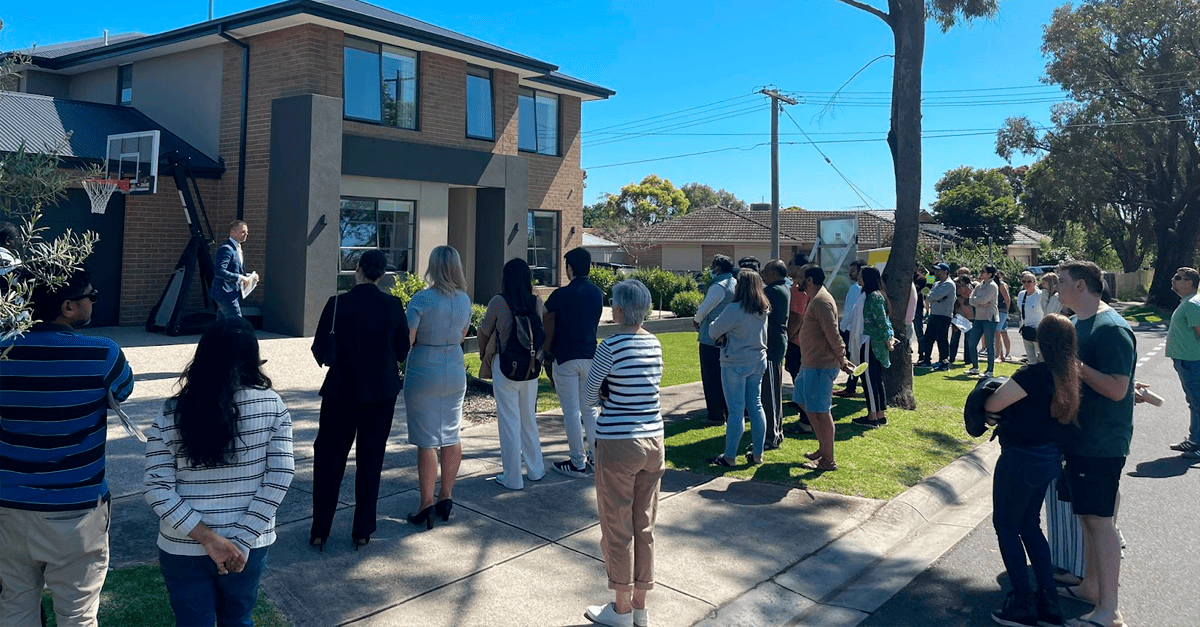
Image from RayWhite
“Affordability pressures have pushed some buyers towards more attainable dwelling types, but demand for detached homes in established suburbs remains extremely high,’ Ms Granzien says.
“Buyers who are finance-ready are moving quickly, and competitive offers are common.”
Key regional centres such as Toowoomba, Ipswich, Rockhampton, the Fraser Coast, and the Whitsundays continue to benefit from lifestyle migration and local economic stability.
“Looking ahead, Queensland is entering 2026 with solid fundamentals.
“Population growth is expected to remain strong, rental supply will stay tight, and major infrastructure projects are progressing across the state.”
WESTERN AUSTRALIA
REBAA Western Australian Representative Peter Gavalas says Perth continued to perform strongly in 2025, with low stock levels and intense buyer demand placing upward pressure on prices.
“New listings have fallen 28% compared to the same time last year, while total listings are down 26% over the same period.”
“Rental vacancy rates remain well below the long-term average”, he says, while “Gross rental yields remain among the strongest in the country at approximately 4%.”
Interest rate cuts in February, May and August 2025, coupled with the introduction of the First Home Guarantee in October, added significant demand to the market and contributed to tightening stock levels, he says.
“The sub-$850,000 price point – aligned with the (FHG) scheme’s cap – has experienced particularly strong growth, with properties frequently selling 10 to 12% above the asking price and attracting 10 or more offers.
“We also saw more investors return to the market as confidence in Perth’s price outlook strengthened and rental yields remained robust.
“Investor activity is now heavily concentrated in the same price bracket as first home buyers, adding further pressure to that segment,” Mr Gavalas says.
As for 2026, Peter Gavalas says that persistent “low supply, combined with growing pent-up demand, is likely to keep market conditions tight and price growth elevated.”
SOUTH AUSTRALIA
In South Australia’s REBAA’s State Representative Matt O’Donoghue says 2025 was defined by record-breaking prices, strong rental yields, and constrained supply.
“This relates to both metropolitan Adelaide and regional areas showing resilience and growth.”
Rental markets remain resilient, with gross rental yields at 4.7%, well above the national average of 3.7%.
Cotality figures show the median house value in Adelaide rose 8.7% in 2025, while unit values grew even faster, at 9.5%.
Regional South Australia saw even stronger growth, with houses adding 10.9% in value and median unit prices up at a stellar 14.3%.
“Both metropolitan Adelaide and regional towns are benefiting, making the state one of Australia’s most resilient real estate markets,” Mr O’Donoghue says.







.jpg?width=1920&height=1080&name=WTF%20Is%20Happening%20To%20The%20Housing%20Market!%20$500%20Billion%20Wiped%20Out%20As%20Prices%20Fall%20Faster%20Every%20Month%20Scott%20Kuru%20YPU%20027%20(1).jpg)
%20Scott%20Kuru%20YPU%20025.jpg?width=1920&height=1080&name=This%20Is%20Worse%20Than%20A%20Recession%20RBA%20Admits%20Australias%20Wage%20Collapse%20Cant%20Be%20Stopped%20(Prepare%20Now)%20Scott%20Kuru%20YPU%20025.jpg)

























.jpg?width=1920&height=1080&name=EXPOSED%20How%20The%20Govt%20Let%20These%20Oil%20Giants%20Get%20Away%20With%20Paying%20Zero%20Tax%20For%20Aussie%20Gas%20Scott%20Kuru%20DPU%20256%20(1).jpg)







%20Scott%20Kuru%20DPU%20248.jpg?width=1920&height=1080&name=Major%20Banks%20CAUGHT%20Preparing%20For%20Australia%E2%80%99s%20Biggest%20Housing%20Crash%20(Defaults%20%26%20Bankruptcies%20Coming)%20Scott%20Kuru%20DPU%20248.jpg)
%20Scott%20Kuru%20DPU%20247.jpg?width=1920&height=1080&name=This%20Is%20How%20Australia%20Gets%20Pushed%20Into%20the%20Next%20Big%20Reset%20(Trust%20Collapse%20Has%20Officially%20Begun)%20Scott%20Kuru%20DPU%20247.jpg)







%20Scott%20Kuru%20DPU%20239.jpg?width=1920&height=1080&name=URGENT%20Life%20In%20Australia%20Has%20Become%20Impossible%20For%20Millions%20Of%20Aussies%20(It%E2%80%99s%20About%20To%20Get%20Worse)%20Scott%20Kuru%20DPU%20239.jpg)










%20Scott%20Kuru%20DPU%20227.jpg?width=1920&height=1080&name=URGENT%20ALERT%20Australia%E2%80%99s%20Property%20Market%20Is%20Sliding%20Into%20Something%20Much%20Bigger%20(Prepare%20Now)%20Scott%20Kuru%20DPU%20227.jpg)